

Designing The First Explorer of RESO
Link to Video: https://youtu.be/b4QPh3urvSc
One of the things I love most about working on RESO is that every milestone opens the door to something completely new to learn.
When I started building this project, I knew I'd eventually need a playable character, but I honestly underestimated how much of a journey that would become.
Designing this character wasn't just about creating an astronaut. It ended up becoming my introduction to an entire side of game development that had always felt a little mysterious to me.
More than just a character
Early Concept Arts - Finding the character.
Designing by removing
From the very beginning I knew I didn't want the protagonist to feel like an action hero.
RESO isn't a game about combat, power, or saving the world. It's about exploring an abandoned place, paying attention to your surroundings, and slowly piecing together what happened there.
That meant the character needed to communicate something very different like curiosity, patience and a little vulnerability.
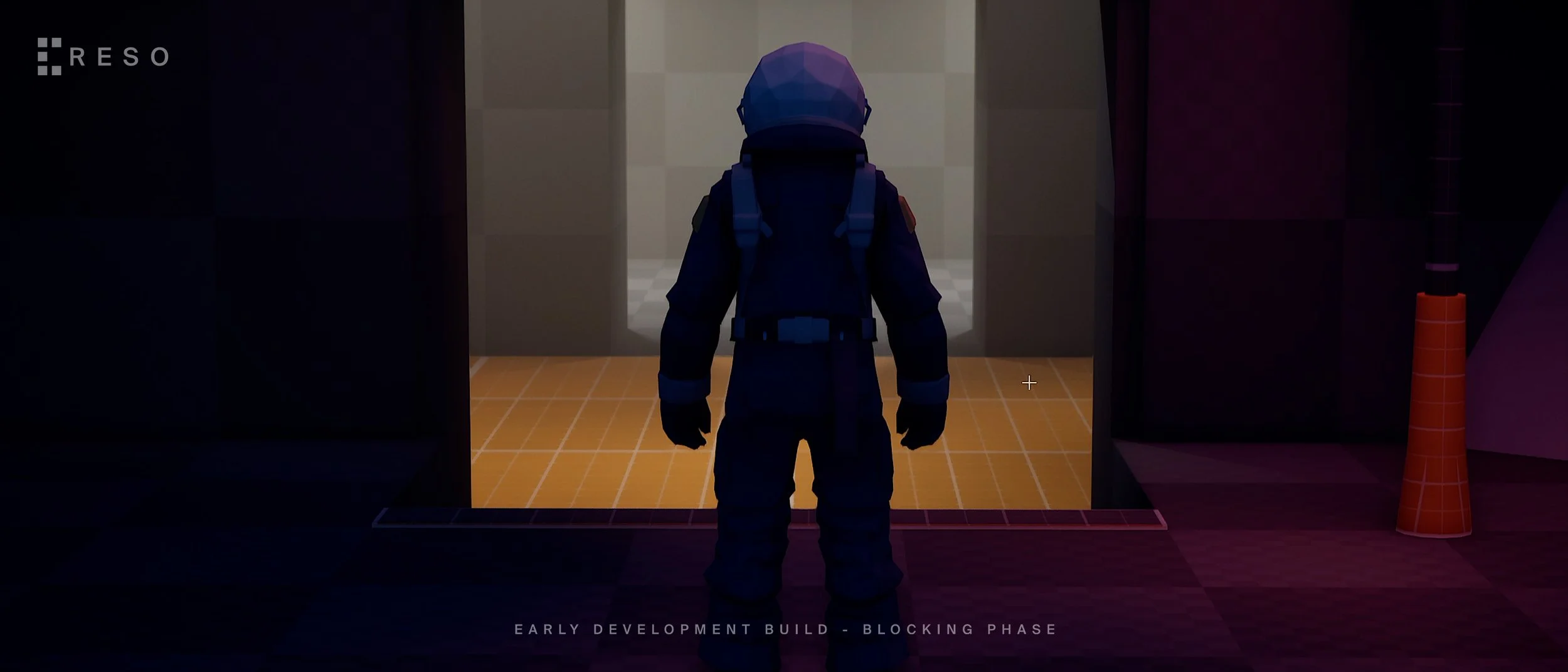
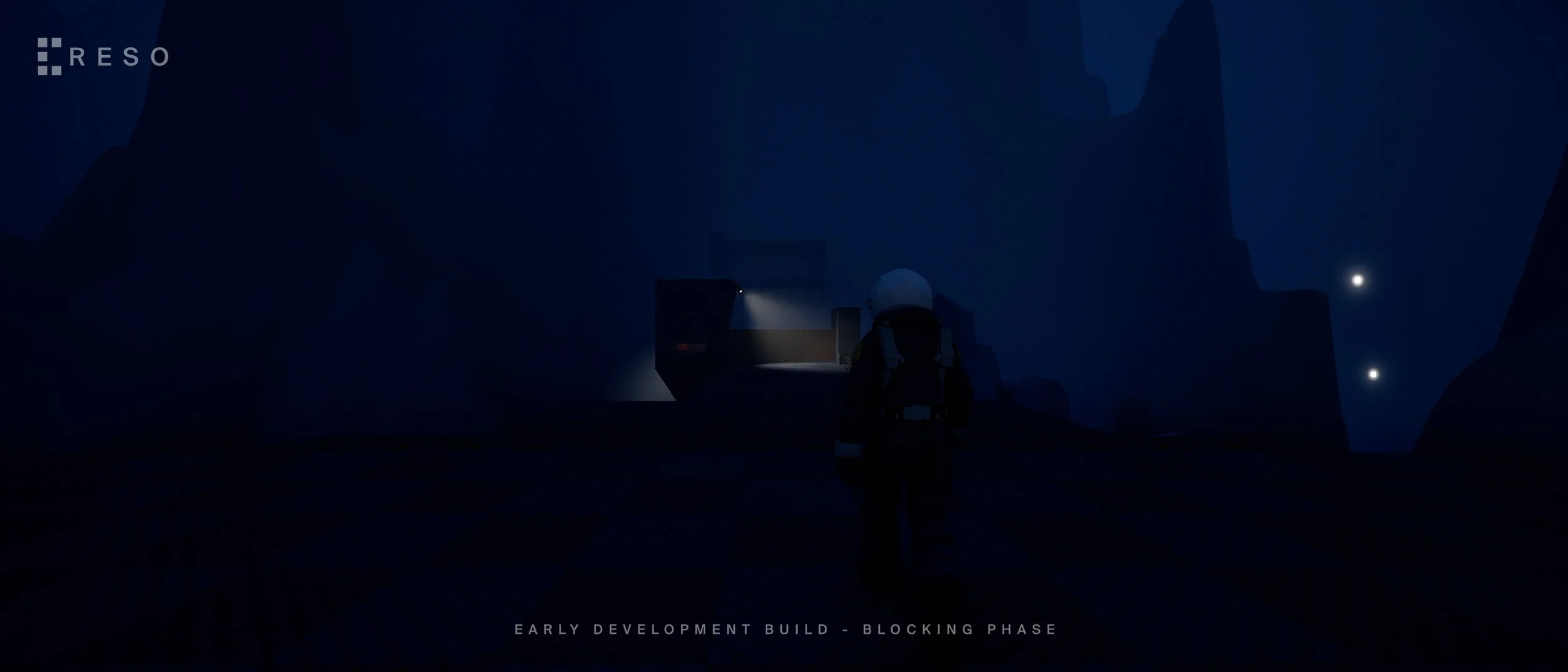
I wanted someone who felt small compared to the architecture around them, almost as if they had wandered into a place that was never really built for humans.
That idea ended up guiding almost every design decision.
One thing I've noticed while working on RESO is that I spend just as much time removing things as I do adding them.
Extra pockets disappear, panels get simplified, lines become cleaner, etc. etc...
The more I worked on it, the more I realized that the simplest version was usually the strongest one.
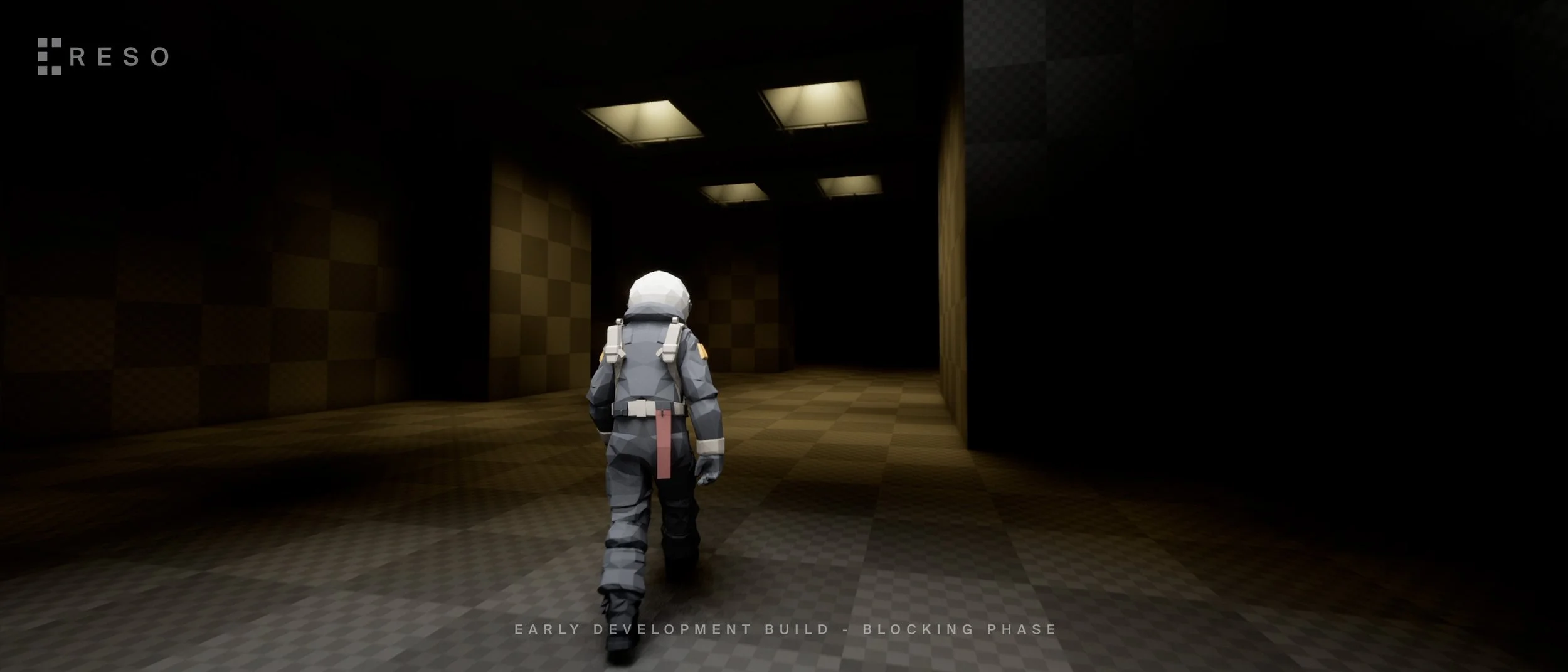
I wanted him to be recognizable from a distance, almost entirely through his silhouette.
Hopefully, if you only saw his outline through the fog, you'd still know it was him.
A completely new workflow
I've been using Blender for years, but mostly for simple environment work and quick prototypes.
This project pushed me much further than that.
For the first time, I wasn't just making a model. I was building something that actually had to exist inside a game.
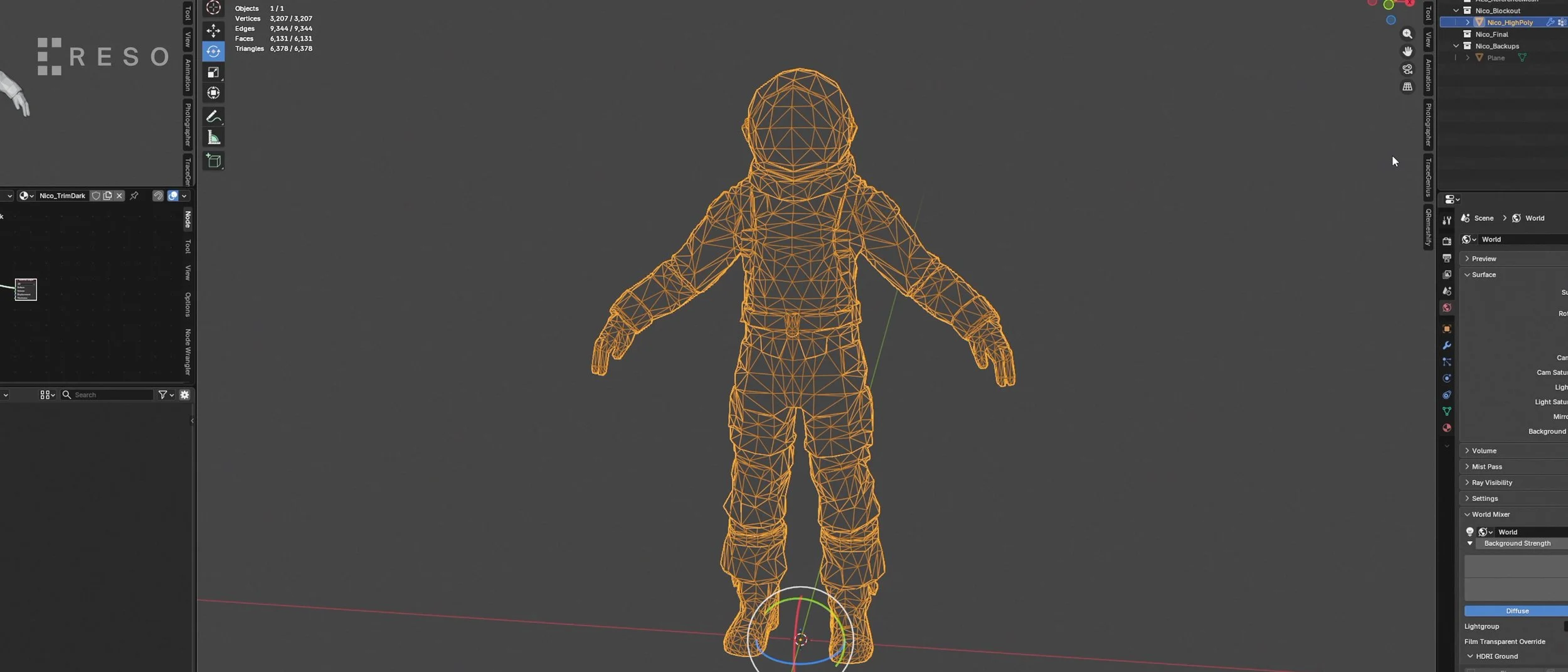
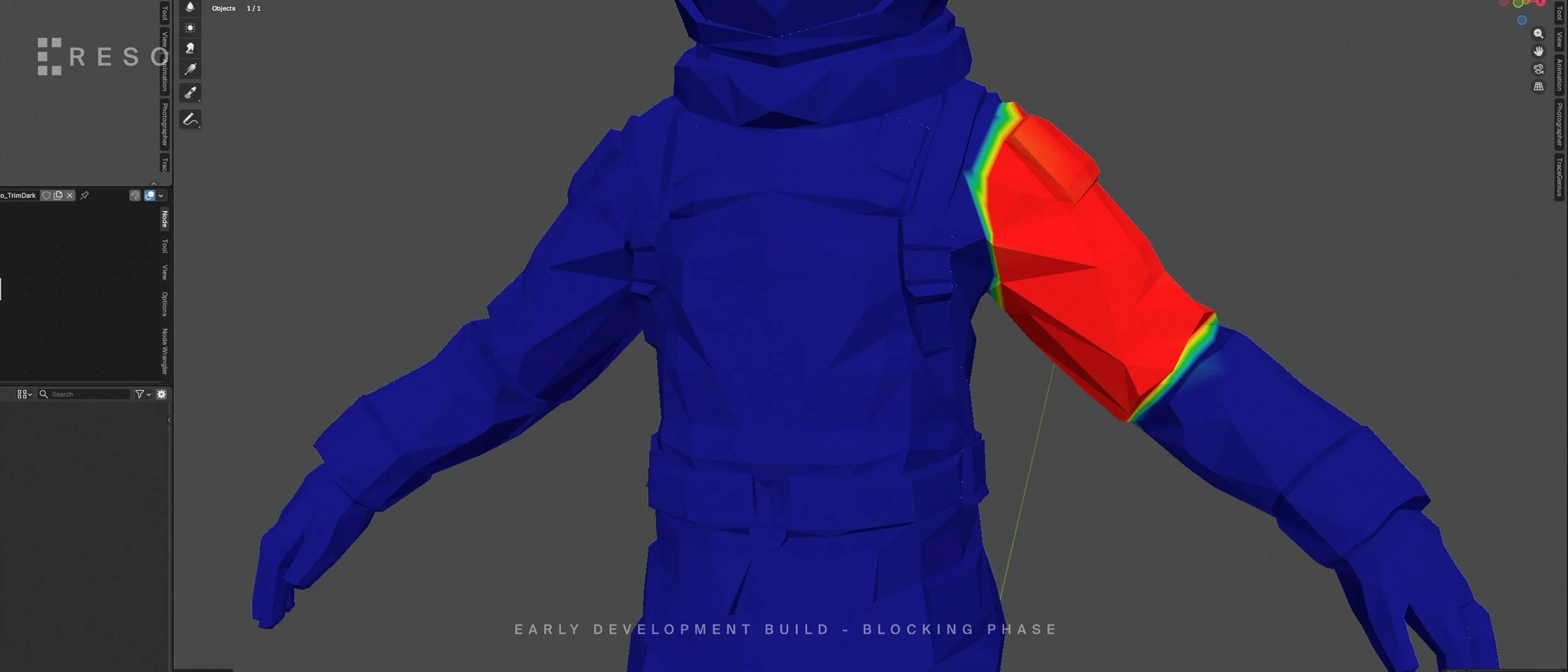
That meant learning about rigging, weight painting, exporting, importing, animation retargeting, animation blueprints, and a long list of things I'd barely touched before 🫠.
My workflow quickly became a loop.
Design something in Photoshop.
Model it in Blender.
Rig it.
Paint the weights.
Export it.
Import it into Unreal.
Test an animation.
Notice something wasn't quite right.
Go back to Blender.
Fix it.
Repeat.
Over and over again.
There were plenty of moments where I thought I'd finally solved something, only to discover I'd broken something else in the process. Looking back, those moments are actually some of my favorites. Every mistake forced me to understand a little more about how all these different pieces fit together.
Finding the right balance
One challenge that surprised me was deciding how detailed he should actually be.
RESO has a very restrained visual style. Large shapes, clean surfaces, simple materials, and very little visual noise.
I wanted the character to belong in that world instead of feeling like he had been imported from a completely different game.
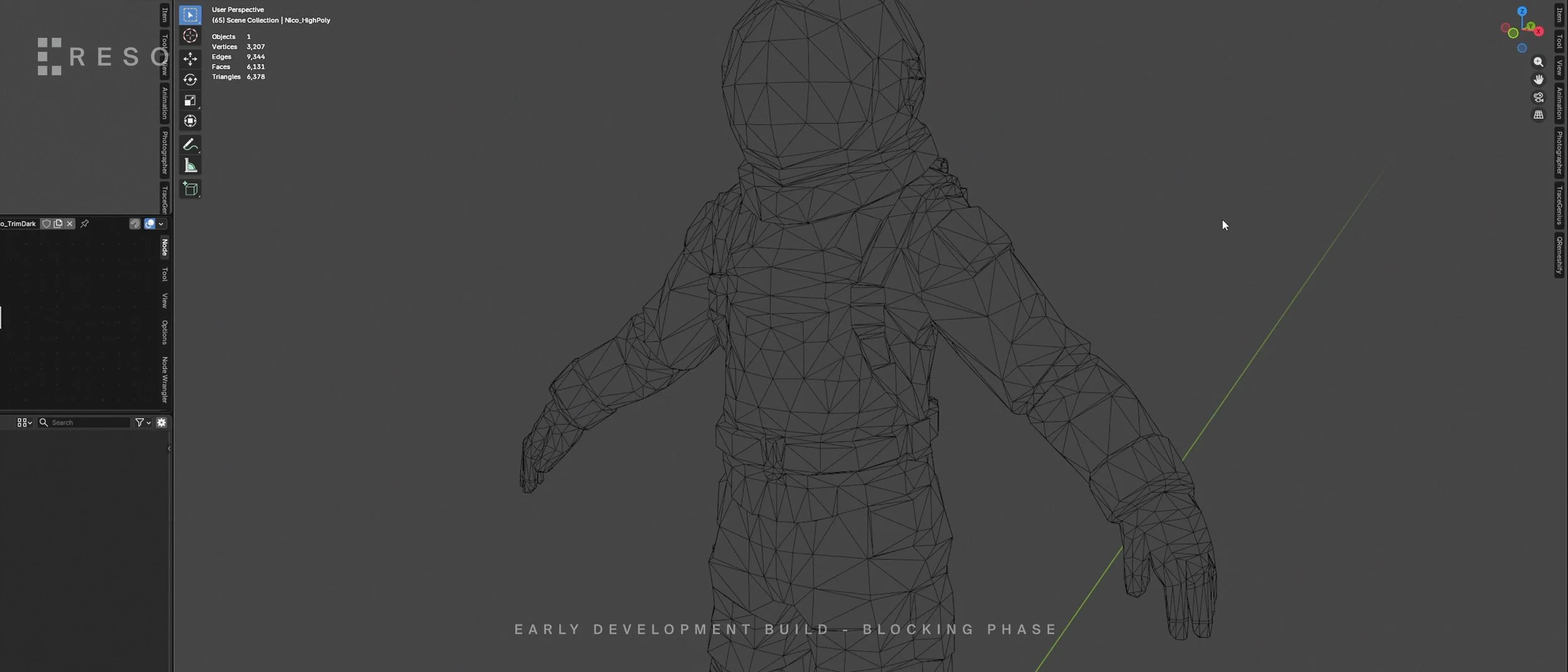
At the same time, I didn't want him to be too low poly.
The goal became finding a middle ground, simple enough to stay readable, but detailed enough to feel believable up close.
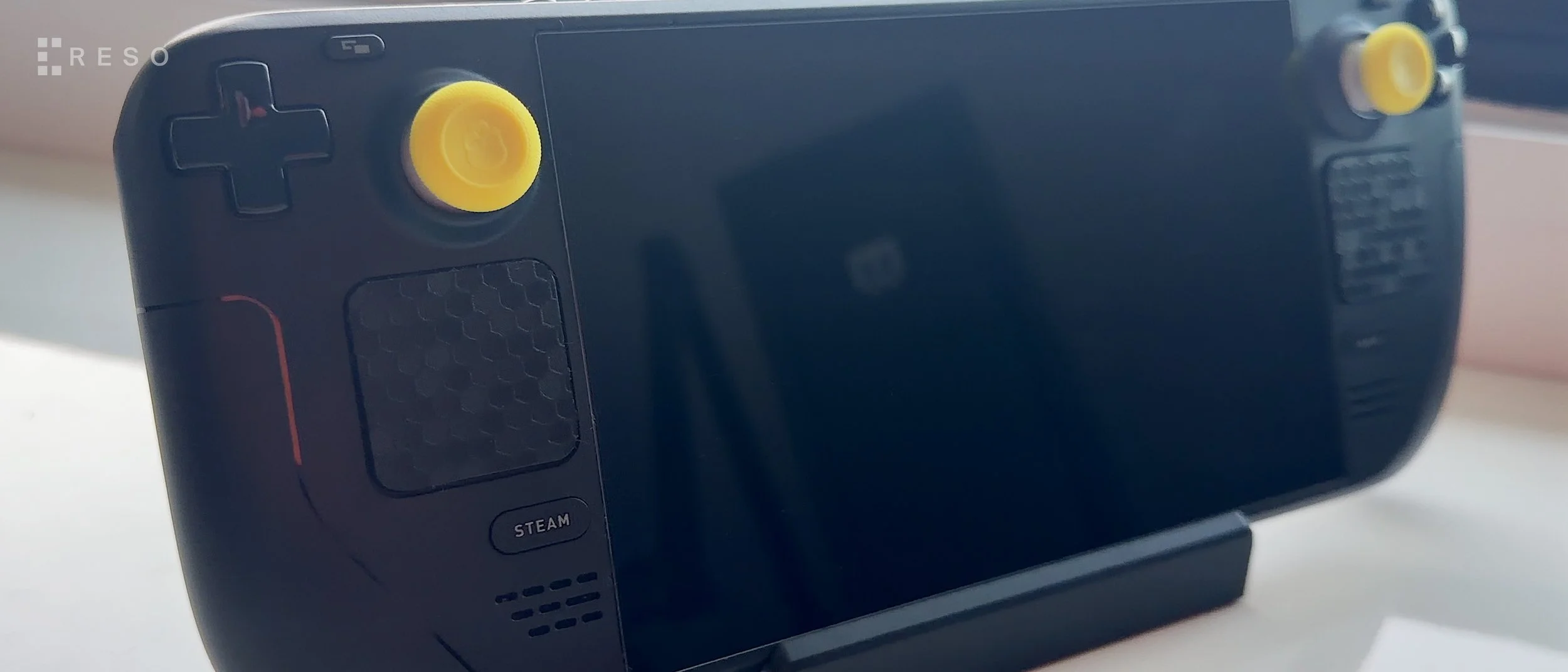
Performance also played a role here. One of my long-term goals is to make RESO run well on lower-end hardware, hopefully even on the Steam Deck someday. 👀
It's still far too early to know if I'll get there...
...but that's definitely something I'm keeping in mind with every decision I make.
Version One
The character you see today is only the beginning.
I'd love to keep refining him over time without losing the simplicity that defines him.
The backpack will probably become more functional.
I'm already thinking about adding a few subtle pieces of equipment, small straps that sway as he walks, a work light attached to the backpack, maybe a couple of practical tools that hint at who he is without making him feel overly designed. We’ll see.
Those little details won't be there to make him look cooler but to make him feel more believable.
Like someone who volunteered to investigate a strange signal... and packed only what they thought they would need.
Looking ahead
One of the reasons I started making these devlogs, and writing these blog posts, is because I wanted to document this process while it's still full of questions.
Right now RESO is held together by sketches, experiments, temporary 3D meshes, countless iterations, and more than a few mistakes.
That's probably my favorite stage of development. Everything still feels possible.
Next, I'll be moving back into the world itself: environments, props, interactable objects, and all the little details that slowly transform a gray blockout into a place that feels like it has a history.
There's still a long road ahead, but for the first time, RESO finally has someone to explore it.
And somehow, that makes the project feel a little more real.
I hope you enjoyed this little behind the scenes look. Thanks so much for following along, whether you're watching the devlogs, reading these posts, or simply checking in every now and then. It genuinely means a lot!! 🥲
See you in the next update my friends!
Luca
